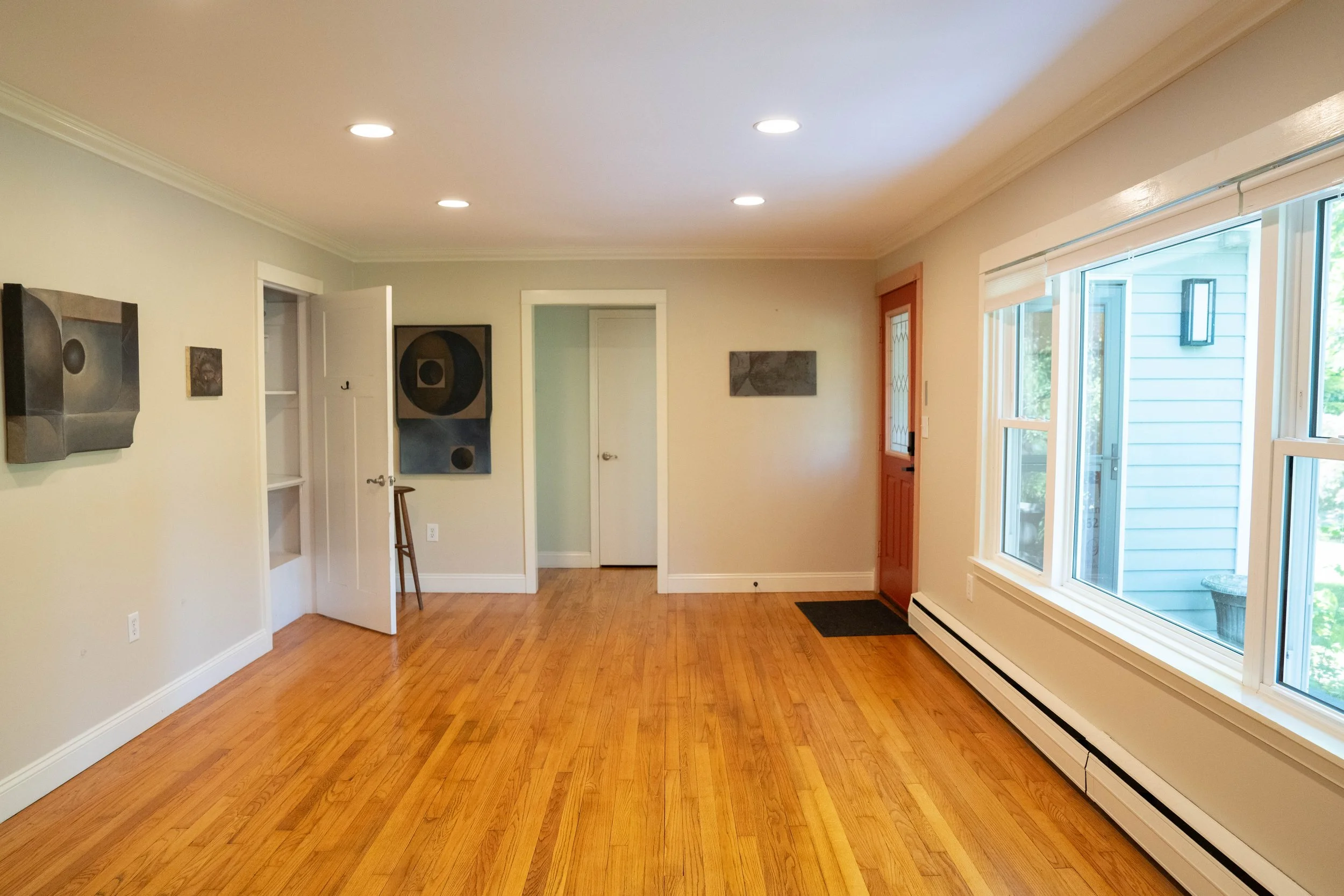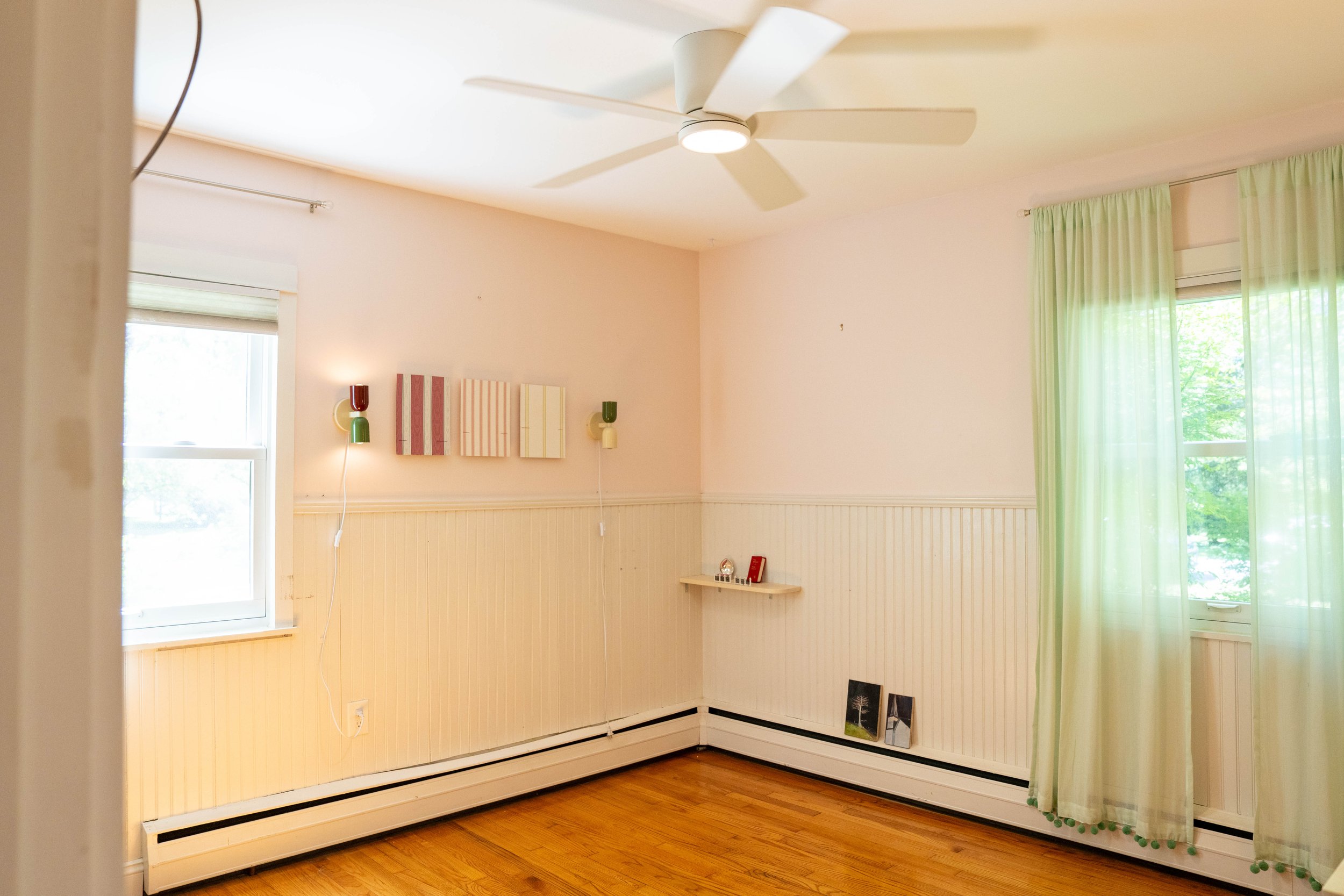
residence (001)
46 Schoonmaker Lane’s featured artists
JO FISH
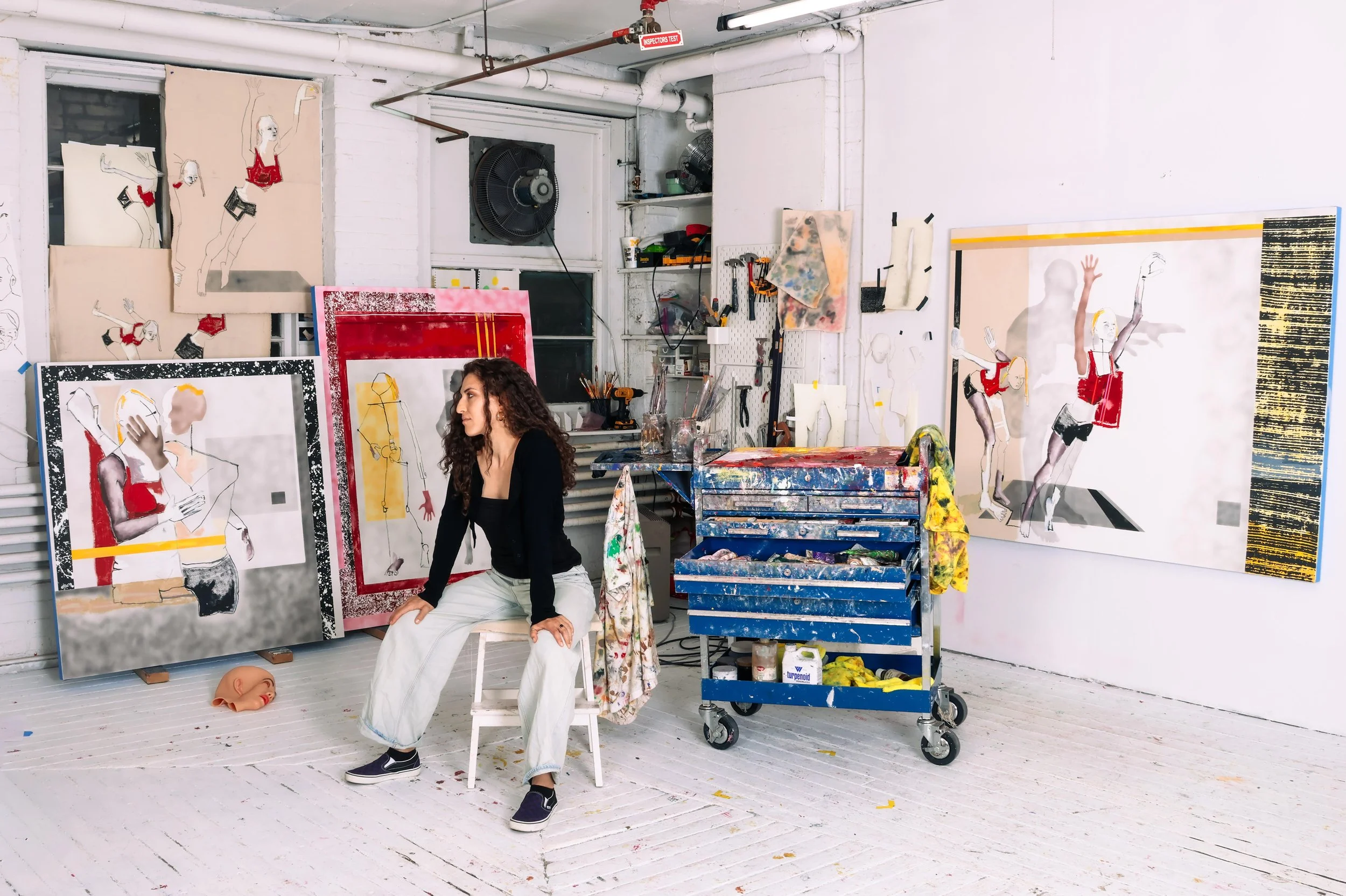
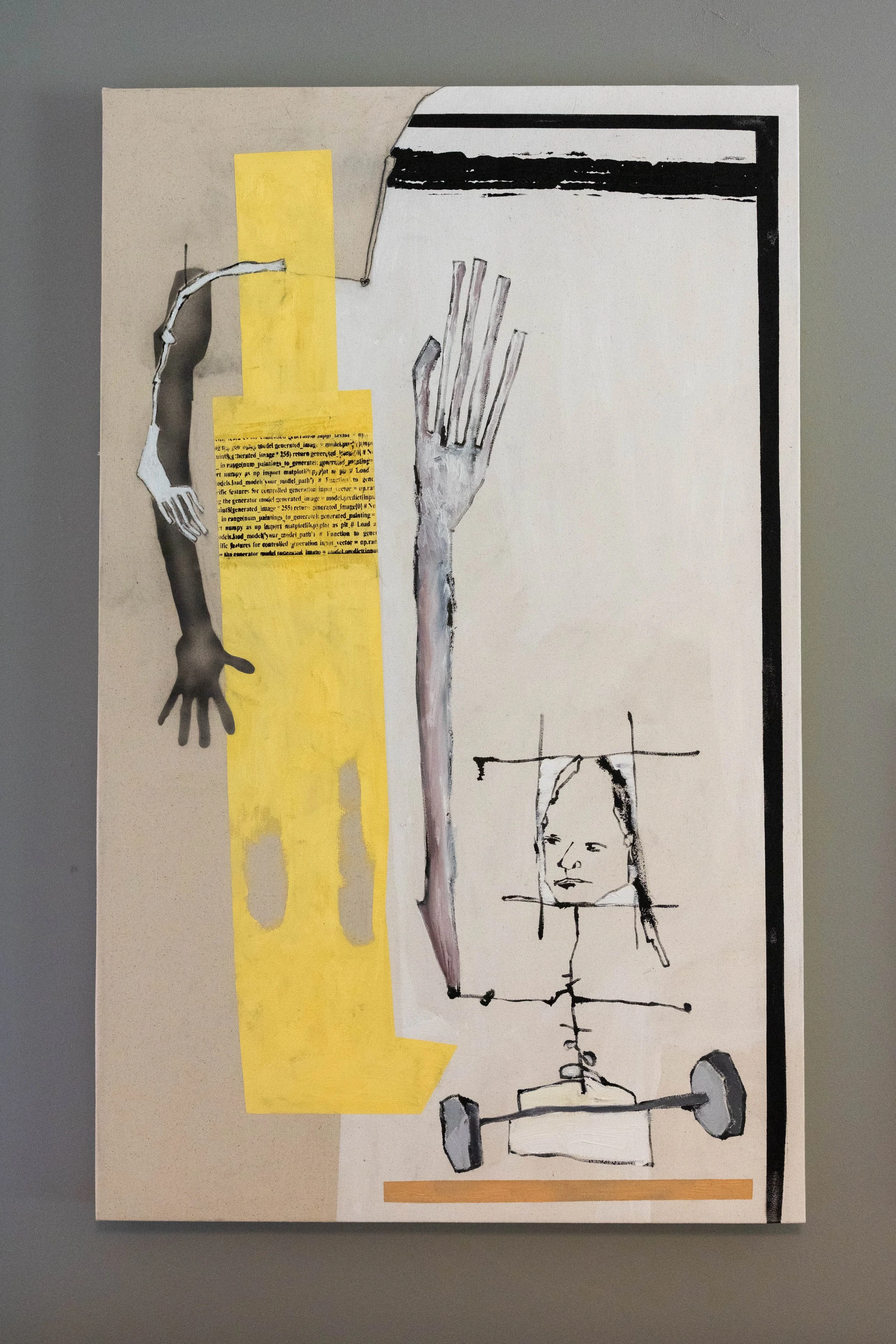
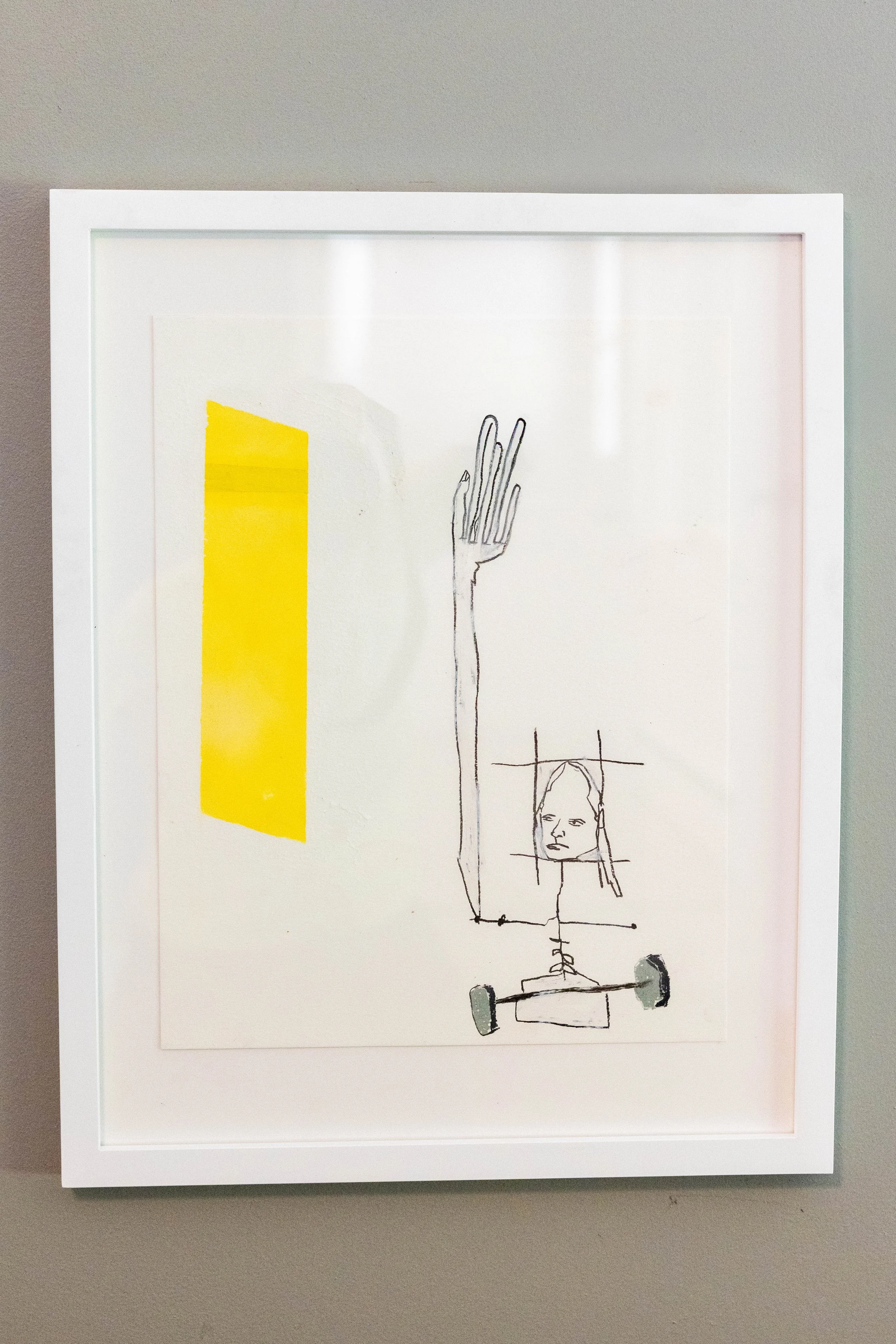
Jo Fish (b. 1996) is an American artist based in New York City. Her paintings focus on bridging historical inspirations with forthcoming scientific and cultural shifts. Fish pulls a great amount of inspiration from the Renaissance, Expressionists and Pop eras while considering contemporary questions that face painting today: how does the image differ in look and feel than previous movements and what tools should we use ? Her process involves a unique synthesis of traditional painting techniques and contemporary technological tools. By using both image and language softwares the artist creates “ready-made” brushstrokes to incorporate on the canvas; these textures range from code to faux splatters and crosshatches...etc. There is an apparent chronology of thought and passage of time in her work, as sometimes represented by geometric horizontal lines. Fish creates works that reflect on our species, our history and our acceleration, while remaining grounded in the tactile, material tradition of painting, always in dialogue with the rich history that precedes us. Strictly depicting scenes from imagination, she gives a window into how she sees, how she sees people seeing and how she learns from those who saw before her.
Fish is represented by Ketabi Bourdet Gallery (Paris) and HDM Gallery (Beijing). She has shown her work internationally in places such as New York City, France, China, Switzerland, Argentina and Miami to name a few. Art fair participation, both solo presentations and group shows, include Untitled Miami Beach, Art Brussels, Art Genève, Art Basel Hong Kong, Art021 Shanghai, Dangdai Beijing and Art Paris. Fish has had institutional representation at places such as the K11 Art Museum Shanghai. Selected press includes Observer Magazine, Artsy, Harper’s BAZAAR and Du Quotidian de L’art. Fish has been an artist in residence with R.A.R.O. International Artist Residency Program, the New York Arts Practicum Program and the New York Trestle Artist Residency Program.
RORY BRABHAM
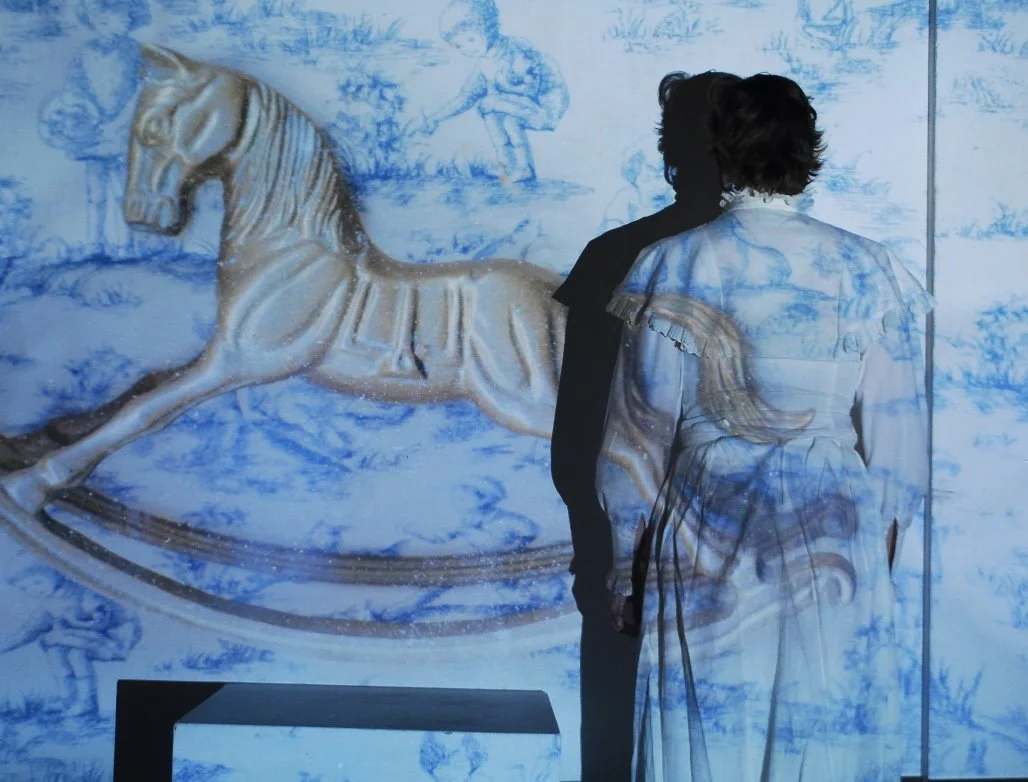
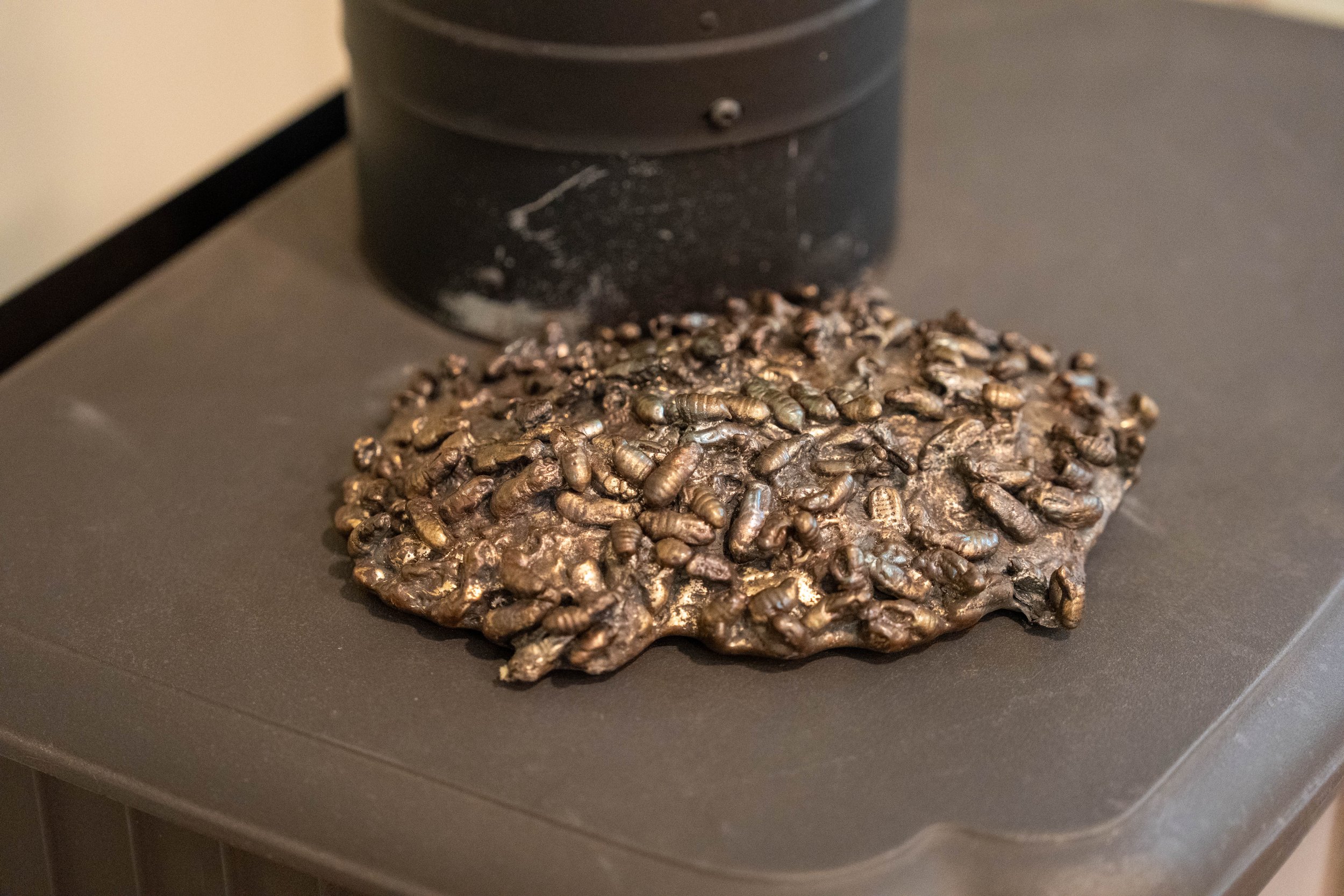
Rory Brabham (b. 2001) is a Mississippi born and Brooklyn based multimedia installation artist . His sculptural practice utilizes the aesthetic of domestic spaces to explore the nature of belonging and belongings along with the ironies of religious ideology and normative gender ideals that echoed in his upbringing. Rory holds a BFA with a concentration in Sculpture from Mississippi State University. He has exhibited in various institutions nationally- most notably with New York’s Trans Art Fest, at the Mississippi Museum of Art’s 2025 Invitational and through the Mid-South Sculpture Alliance as a winner of the 2024 Diane Komminsk Scholarship Award.
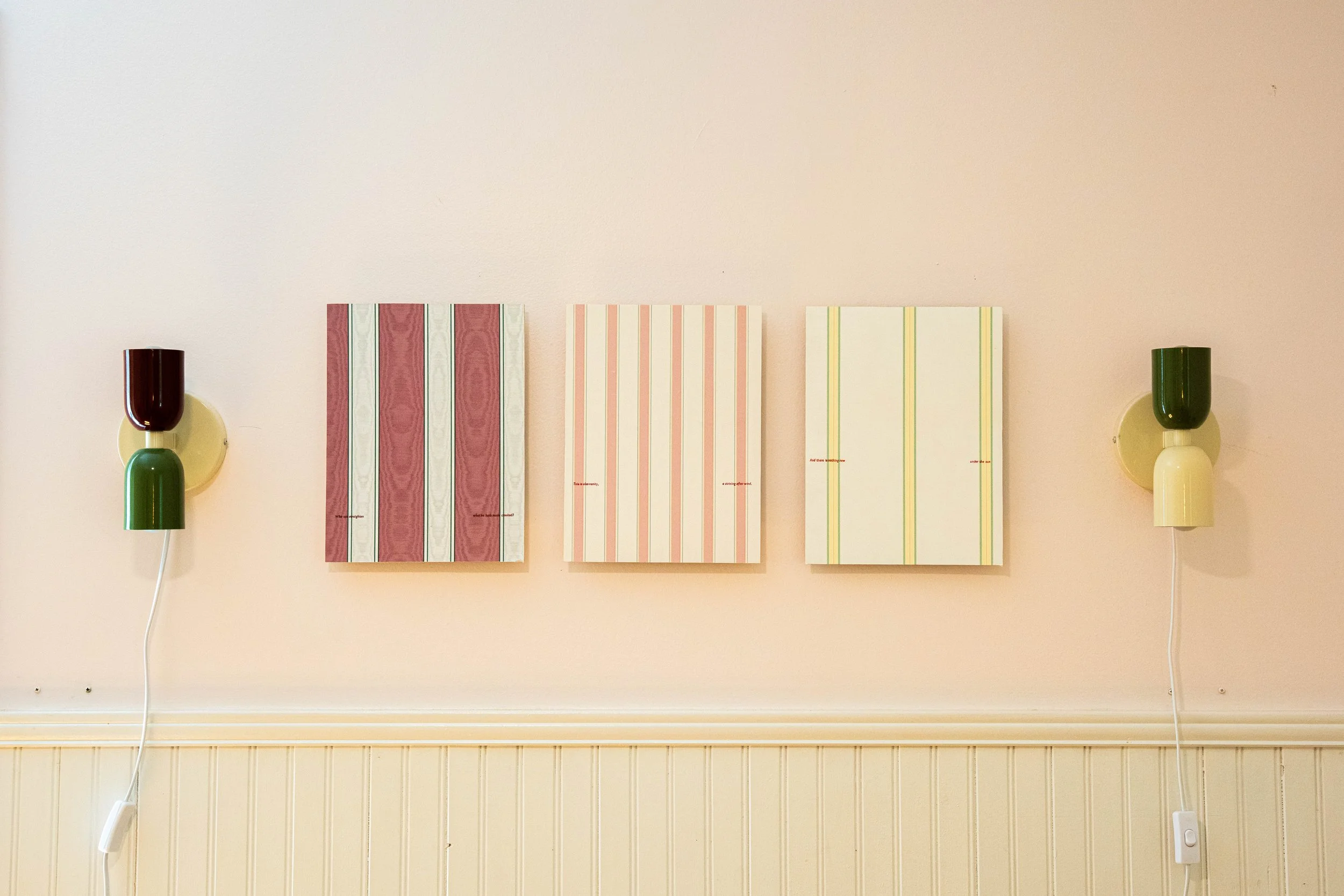
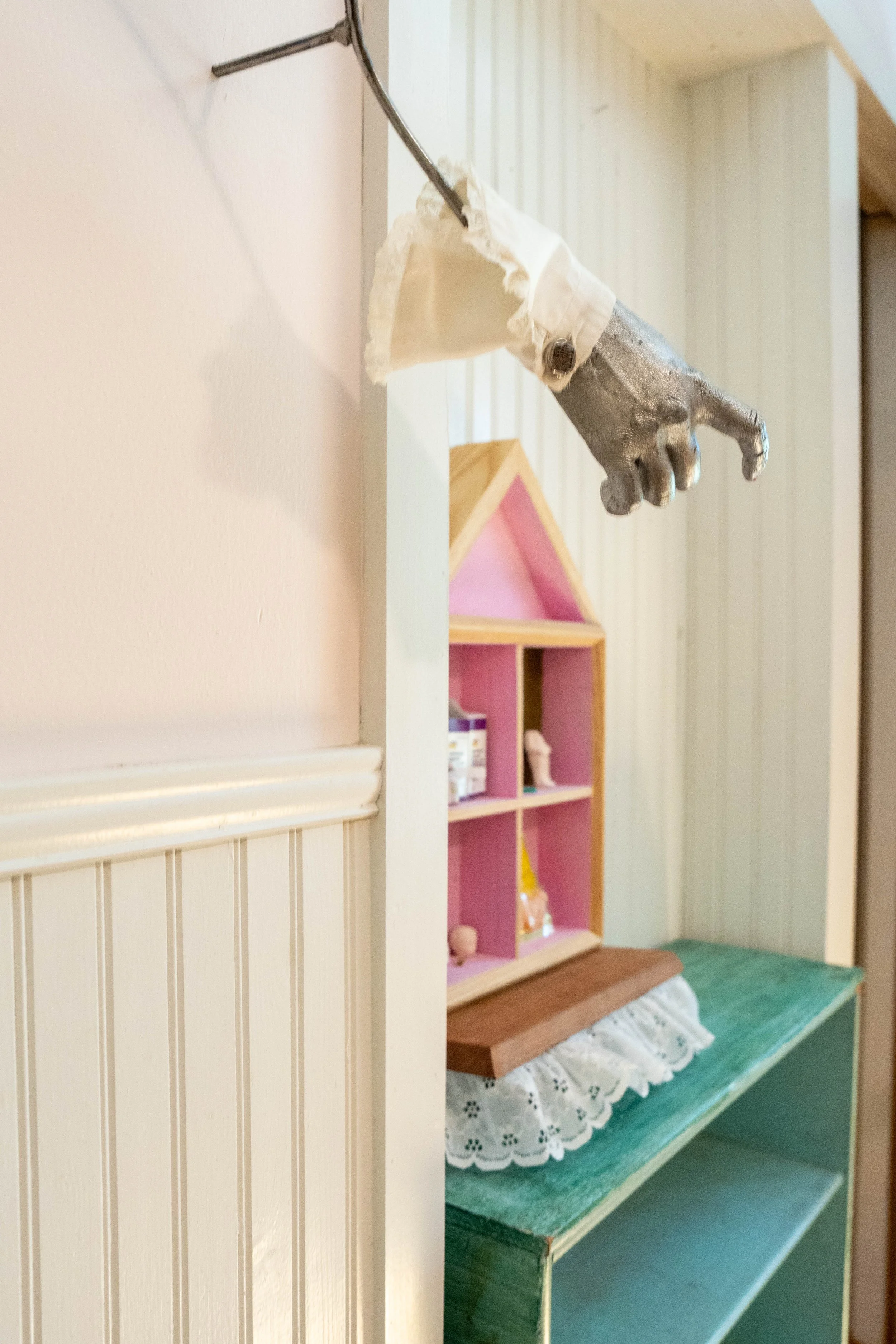
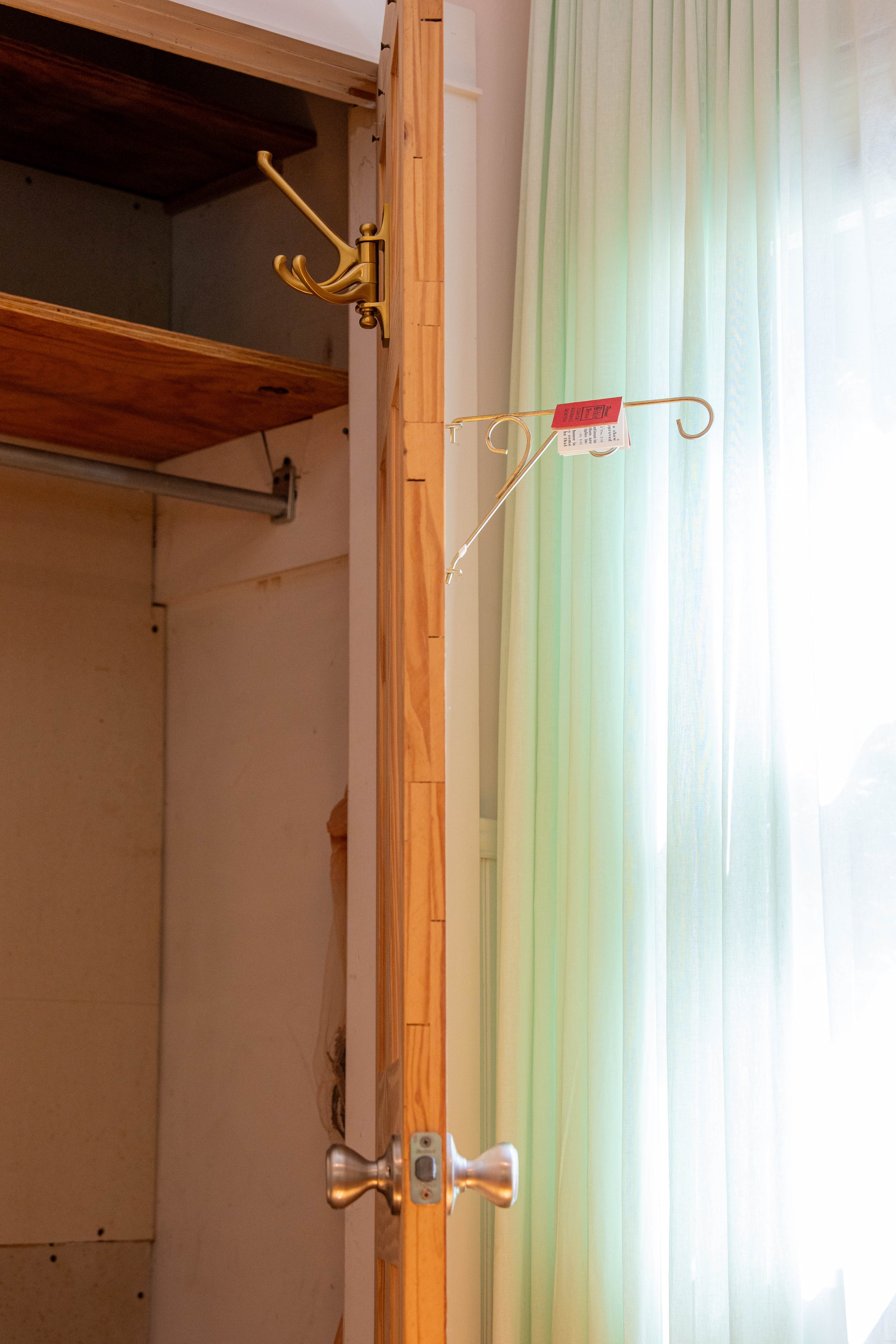
“Through the de/recontextualization of found objects, personal possessions, and family heirlooms, my work seeks to de/reconstruct the home that normativity fruitlessly offers. In order to deploy a counter-narrative to my religious rural upbringing, I exploit and trans-form the familiarities of heirloom, the absurdities of tradition, and the ubiquity of southern detritus, seeking to interrogate and subvert relationships between gender, labor, and their material subtexts.
Ultimately, my practice is a grappling with my inheritance - exposing, bastardizing, and refuting the boundaries of what is permissible within hegemonic constructions of family, home, religion, and identity. I perform rites of trans-gression with childhood mementos, heirlooms, and components of the nuclear home by stripping them of their associations, reconfiguring and redeploying them as collections of unsettled, disembodied parts to be suspended and displayed in all their artifice, conjuring an atmosphere both familiar and unnerving. Feedback loops of im/materiality flow within sculpture, painting, performance, and installation, where networks of intra-action between disparate elements produce and reinforce their meaning(s).”
ANNIE GOLDMAN
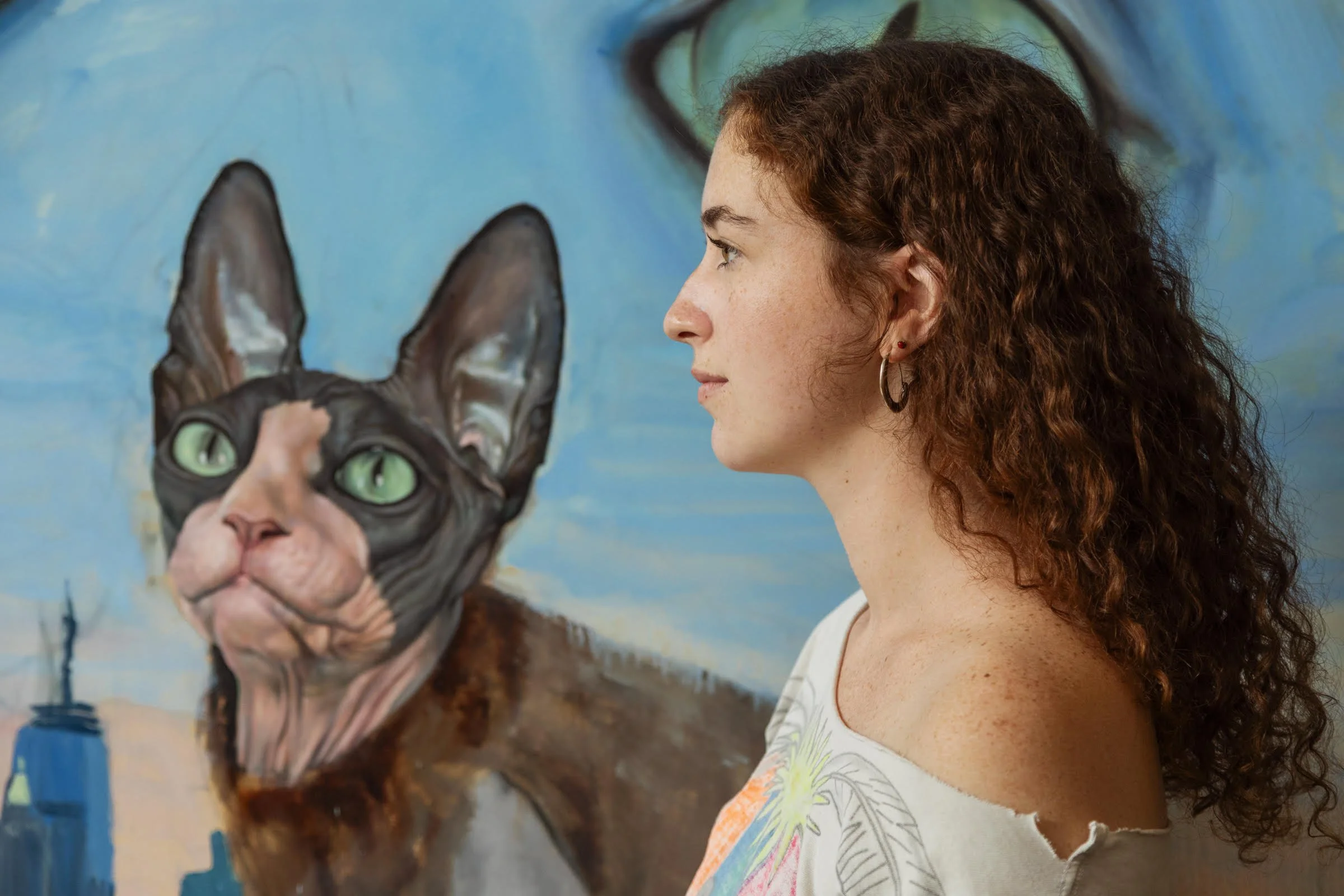
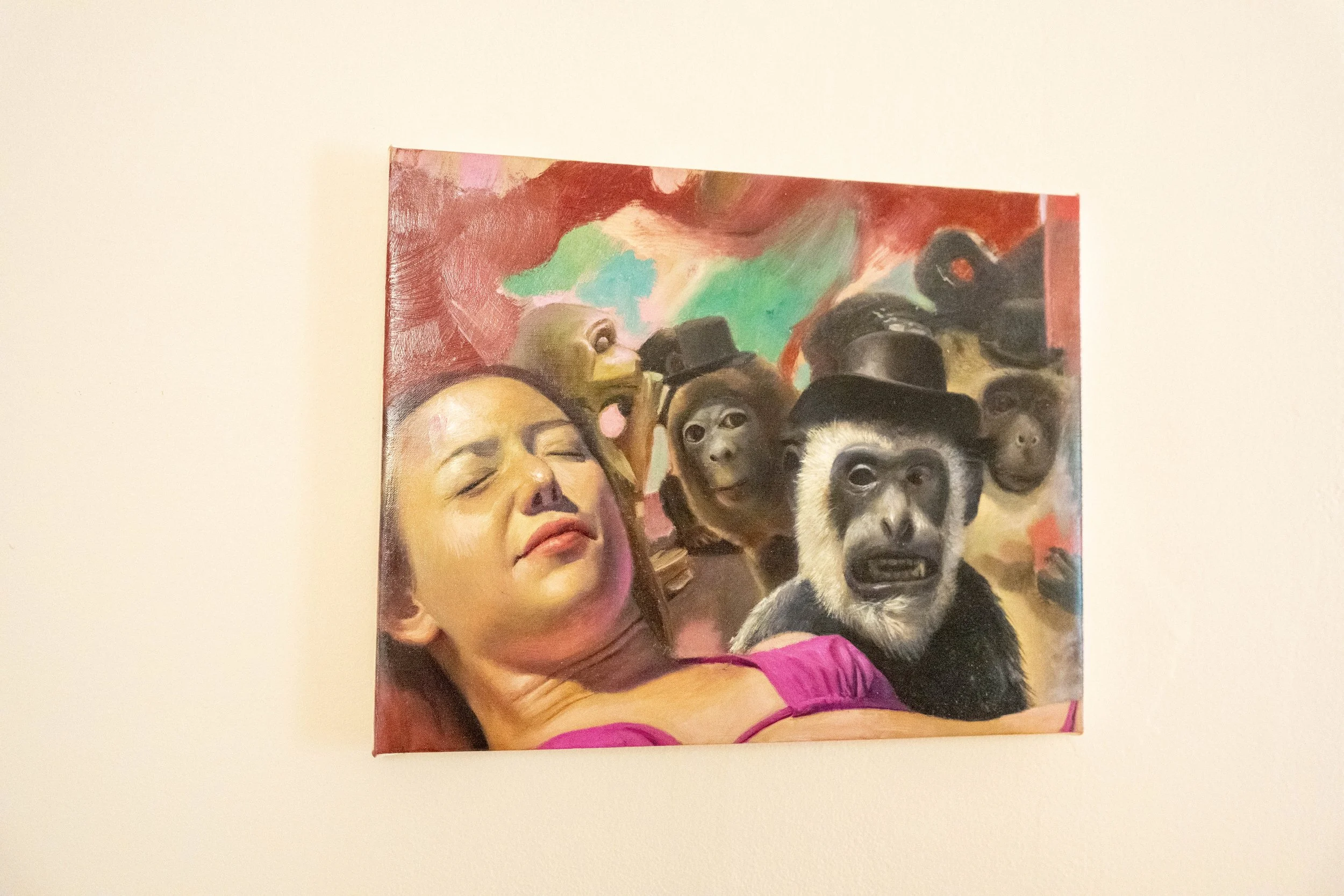
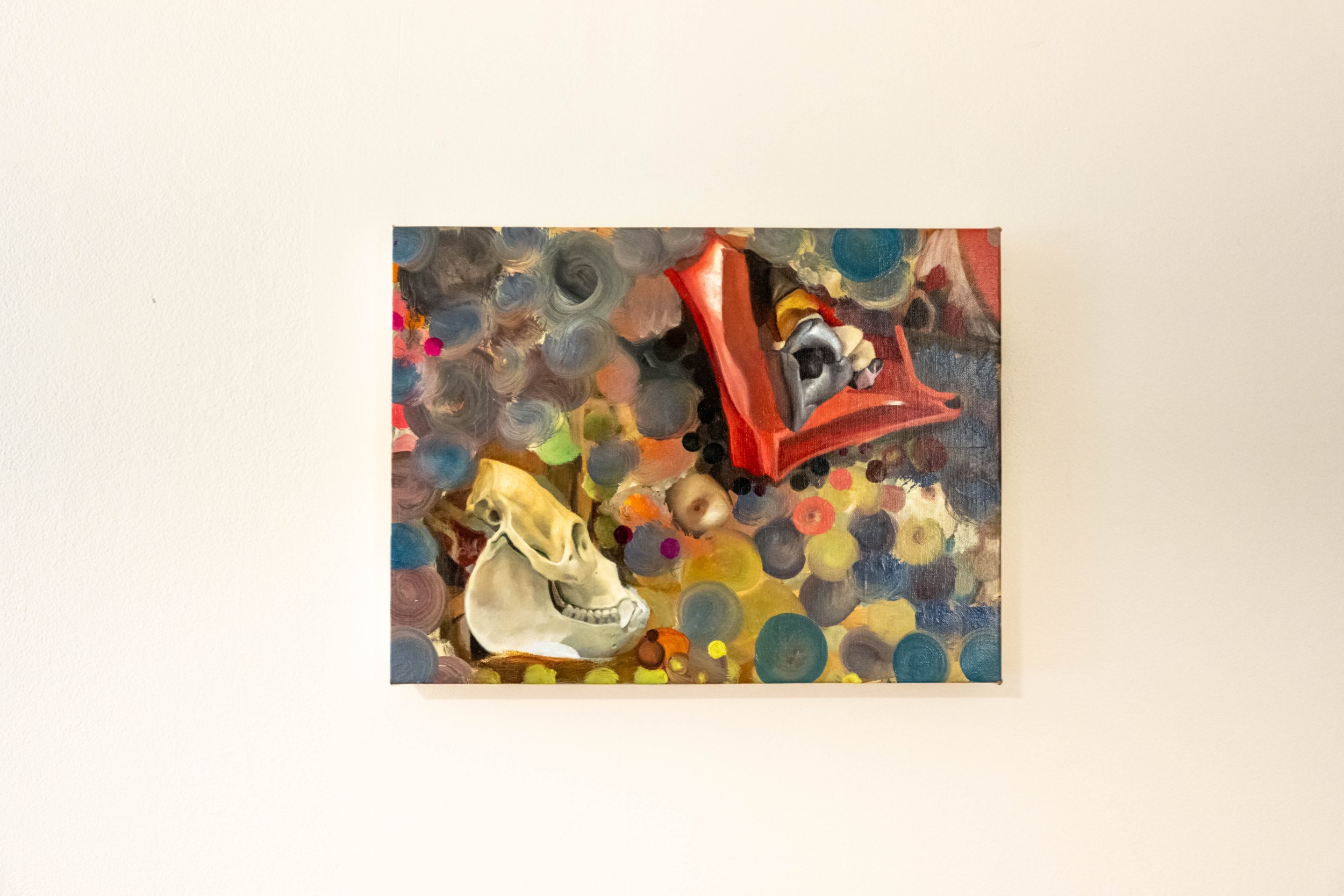
Annie Louise Goldman (b. 2003 Redwood City, CA) is a painter based in Brooklyn, NY whose work explores biblical and kabbalistic themes through a personal midrash. Animals perform manifold functions in the paintings; monkeys are pre-expulsion from Eden humans, cats and people undergo spiritual metamorphosis on a journey to talk to God, and a whale's digestive tract breaks down and reconstructs language itself. Annie earned a BFA in Drawing + Painting from the Laguna College of Art and Design and is an alumna of the Yale Norfolk School of Art.
GREG DZURITA
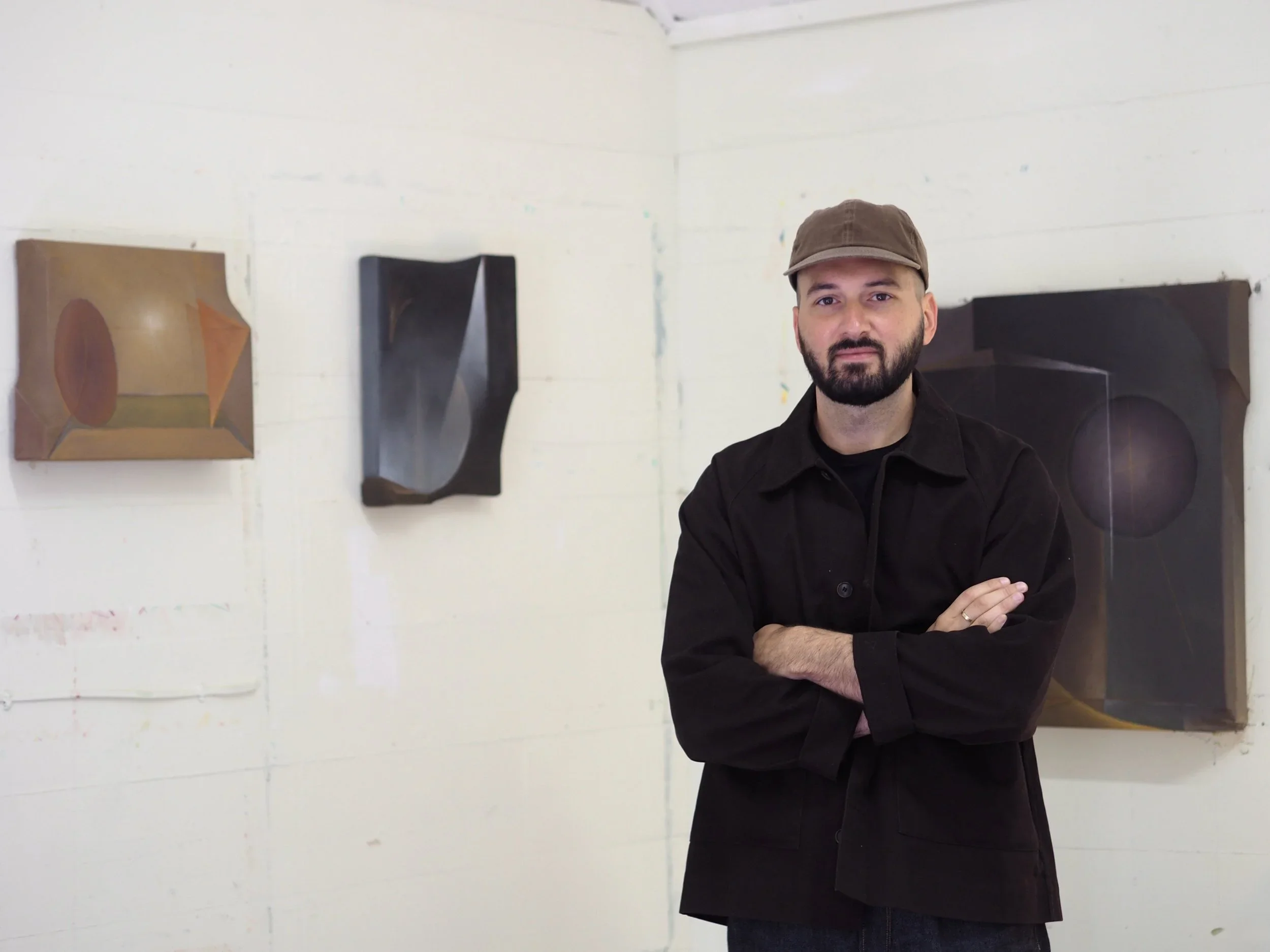
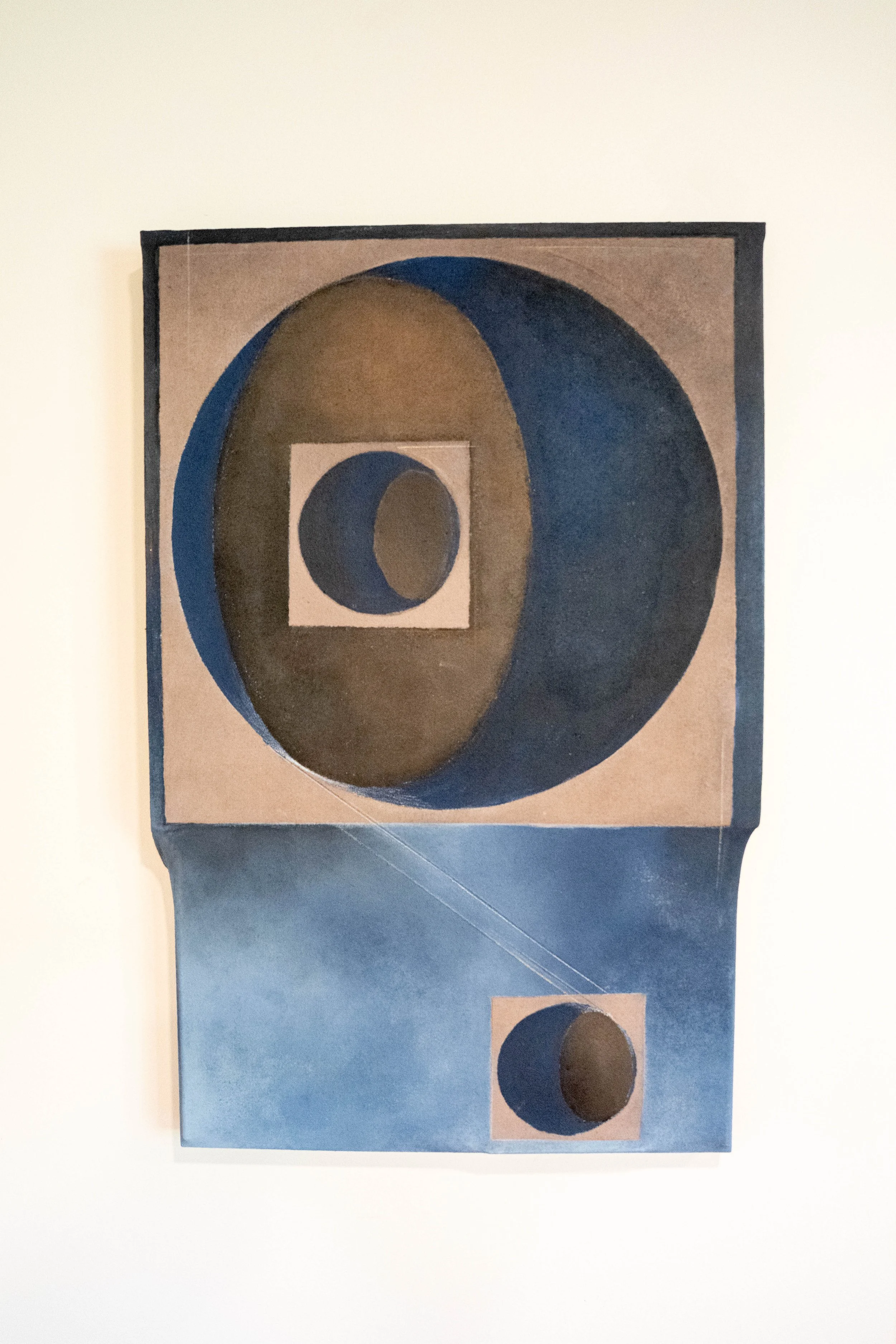
Greg Dzurita is a New York City–based artist and curator working in geometric abstraction. Inspired by architecture, natural textures, and Earth pigments, his sculptural paintings have been exhibited in New York City, Kingston, Denver, and Buenos Aires. He has participated in residencies with Willow House, Proyecto ’ace, and Byrdcliffe Arts Colony, and was part of the Canopy Program mentored by Tamara Gonzales. He has been featured in Two Coats of Paint, 1st Dibs, White Hot Magazine, among other publications.
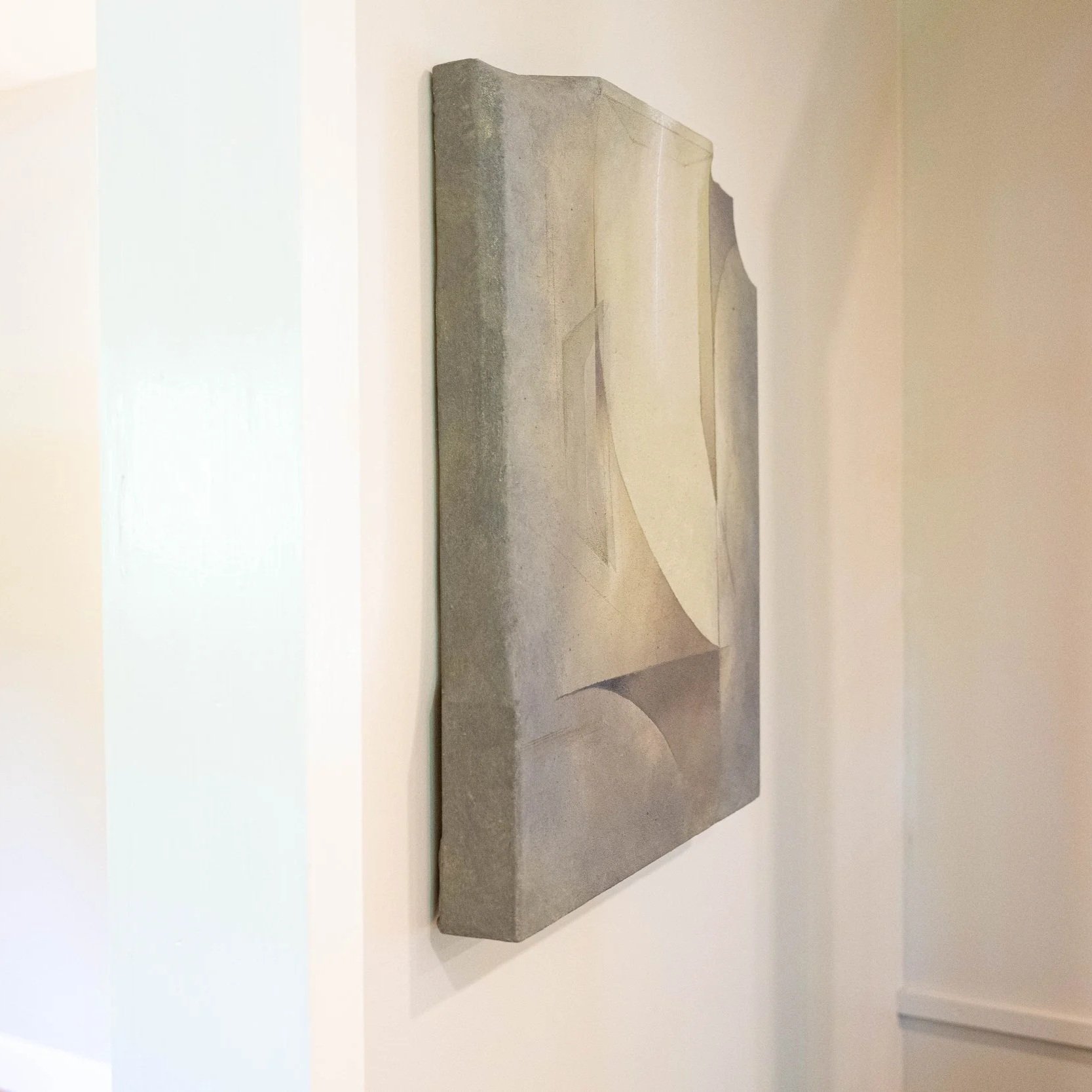
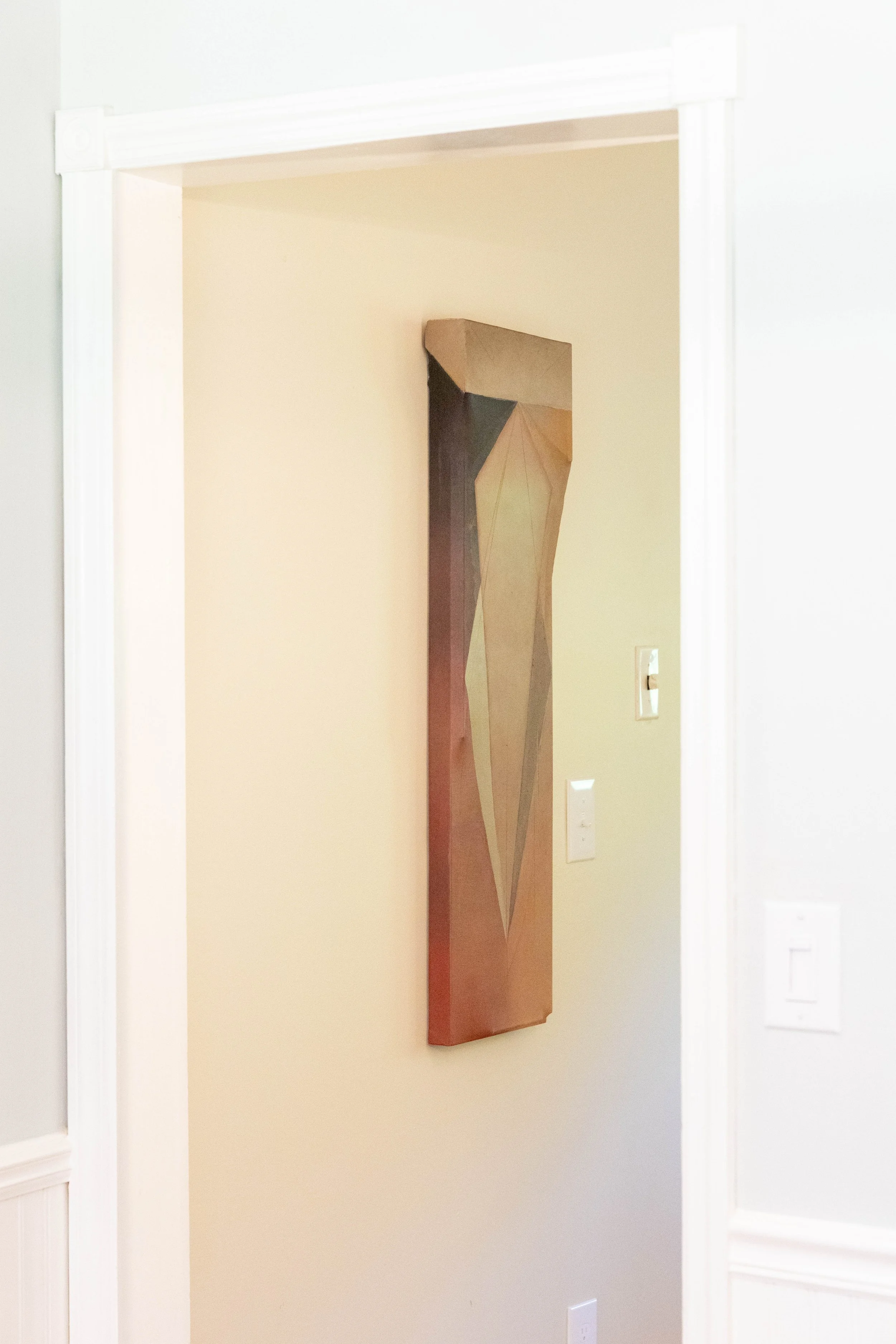
“My work operates as a system where geometry, surface, and structure work together to generate spatial tension and movement. The genesis of each painting starts with the initial spark of a visualization meditation and is subsequently translated into geometric sketches. Rather than using a standard rectangular surface as a neutral support, I build irregular, sculptural canvases that actively shape the composition. These accentuate and augment my forms, allowing the painting to exist as both image and object.
Forms emerge through a slow, intuitive process that balances control and release. Curves press against angles, centers collapse or expand, and symmetry is continuously interrupted. These internal dynamics create a sense of compression and unfolding, as if the forms are held in a state of suspension.
Color functions structurally as much as visually. Muted, mineral-inflected palettes are layered to produce depth and atmospheric weight, reinforcing the spatial architecture of the painting. Shifts in tone and density suggest recession, projection, and containment, allowing the surface to read as both shallow and expansive.
The shaped canvas acts as a boundary and a catalyst, determining how forms circulate within it and how the work occupies physical space. Edges bend and corners protrude, emphasizing the painting’s presence as an object rather than a window. Through this approach, the work proposes a self-contained knowledge rooted in balance and form. To do this is to accept an omnipresent influence of geometry and intuitively find the painting in the process.”